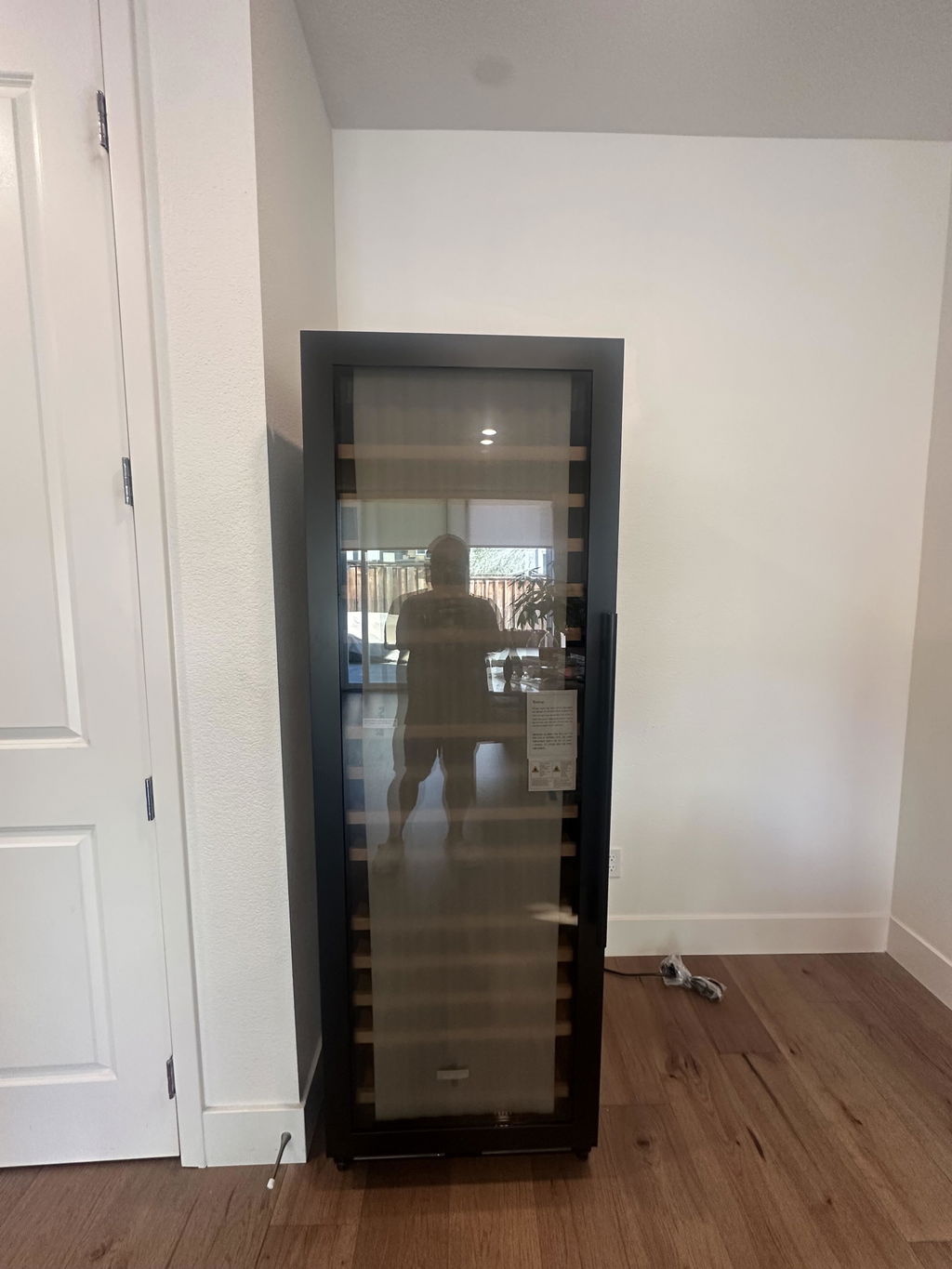
Do You Actually Need a Dual Zone Wine Cooler? An Honest Answer
Share
Every week someone calls us and asks some version of the same question: "I keep seeing dual zone wine coolers everywhere — do I actually need one, or is it just marketing?"
It's a fair question. And the honest answer is: it depends on what's in your glass.
What "dual zone" actually means
A dual zone wine cooler has two separate temperature compartments, each controlled independently. That's it. No wizardry. The top might run at 55°F while the bottom sits at 45°F, letting you store your Cabernet and your Pinot Grigio in the same unit without compromising either one.
A single zone cooler, by contrast, holds one temperature throughout. Great for people who drink mostly one type of wine — or who have a dedicated aging cellar somewhere else and just need a serving fridge for the kitchen.
The trouble is that most of us don't drink just one type of wine.
The temperature problem nobody talks about
Here's what gets overlooked: serving temperature and storage temperature are not the same thing.
A red wine like a Bordeaux is ideally stored around 55°F for long-term aging. But you'd serve it closer to 62–65°F. Whites are typically served between 45–50°F, and sparkling wines even colder — closer to 40–45°F.
If you're pulling everything from one 55°F cooler and serving it immediately, your whites are too warm and your bubbles are practically room temperature by the time the second glass is poured. A dual zone unit lets you set one compartment as your ready-to-drink zone and the other as your short-term aging zone — a distinction that actually matters at the table.
Who needs dual zone (and who doesn't)
You probably want dual zone if:
- You regularly drink both reds and whites (most people do)
- You entertain and want bottles ready to serve, not needing 30 minutes in the freezer
- You're starting to build a small collection and want flexibility as your tastes evolve
- You're doing a kitchen renovation and want one cooler that works for everything
A single zone is likely fine if:
- You drink almost exclusively red wine and age it elsewhere
- You have a separate cellar unit and just need a compact serving fridge
- Budget is the primary driver and you'd rather spend on more bottles than more zones
There's no shame in either answer. We've sold single zone coolers to serious collectors who have their priorities straight and dual zone units to people who just want cold Chardonnay and a spot for the occasional Malbec. The point is knowing what you're buying.
Three and four zone coolers: when do those make sense?
They're less common than the marketing would have you believe, but they're genuinely useful in specific situations — a home bar where you're storing wine, beer, and a few cans of something fizzy, or a tasting room that needs precise control across a range of varietals.
For most home kitchens, dual zone covers 95% of use cases. Triple and quad zone shine in commercial settings or for the serious enthusiast who wants to age different wines at different rates simultaneously.
Built-in vs. freestanding dual zone: the decision that trips people up
This is where we see the most buyer's remorse — not in the zone decision, but in the installation type.
Freestanding coolers vent from the back and need clearance on all sides. Put one of these flush into cabinetry and you'll have an overheating problem within a few months. They're great in open spaces: a bar area, a dedicated wine room, against an open wall.
Built-in coolers vent from the front and are designed to sit flush with cabinetry. If you're doing a kitchen remodel or want a seamless look under the counter, this is what you need — not a freestanding unit crammed into a cabinet.
We can't count the number of times someone has called us about a cooler running warm, only to find out a freestanding model was installed in a tight enclosure. The cooler itself was fine. The installation wasn't.
When in doubt, call us. It's a five-minute conversation that saves a lot of frustration.
What to look for in a dual zone wine cooler
Beyond the zone question, here are the specs that actually matter:
Compressor vs. thermoelectric cooling. Thermoelectric coolers are quiet and vibration-free, which is great for aging wine — but they struggle in warm environments and typically can't cool below about 20°F below ambient temperature. In a warm kitchen, that can be a problem. Compressor-based units are more powerful, work in a wider range of conditions, and are generally what we recommend for most buyers.
UV-protected glass. Light is one of wine's enemies. Low-E glass (the same technology used in energy-efficient windows) blocks UV rays while still letting you see your collection. If you're storing wine for more than a few months, this matters.
Vibration control. Vibration disturbs sediment and can affect the aging process over time. Quality compressor units dampen vibration significantly — it's one of the reasons brands like Liebherr, Transtherm, and U-Line command a premium.
Humidity. This one's often overlooked. Too dry and your corks dry out, letting air seep in. Too humid and you get mold. A good wine cooler maintains 50–70% relative humidity passively, without you having to think about it.
A note on capacity
The bottle counts listed on wine cooler specs are usually optimistic. They assume all standard 750ml Bordeaux-shaped bottles with no labels. Burgundy-shaped bottles (wider shoulders) take up more space. Champagne bottles are bigger still.
A practical rule: take the listed capacity, subtract 15–20%, and that's your real-world number. If a cooler says 100 bottles, plan for 80–85 before it starts feeling crowded.
Our take
Dual zone is the right call for most buyers — not because it's flashier, but because it's genuinely more useful for how people actually drink wine. The flexibility to store reds and whites at different temperatures, or to have a ready-to-serve zone alongside a short-term aging zone, is something you'll use every week.
That said, the "right" cooler is the one that fits your kitchen, your collection, and the way you actually entertain. If you're not sure, we're happy to talk it through — no pressure, no script. We know these products well and we'd rather you buy the right thing than the expensive thing.
Browse our dual zone wine coolers or reach out at 707-831-5988. We're available Monday through Friday, 9am–6pm Pacific.
Grand Cru Wine Coolers is an authorized dealer of Allavino, Liebherr, Transtherm, U-Line, KingsBottle, and more. We're based in Napa Valley and ship from dealers' warehouses across the US